Reinforcing the Free and Active Policy — Indonesia's Geopolitical Strategy Under President Prabowo

President Prabowo Subianto has reaffirmed Indonesia's commitment to a Free and Active Policy amidst global geopolitical dynamics. This article reviews the strategies and challenges faced by Indonesia in pursuing its foreign policy, including the role of parliamentary diplomacy and the importance of domestic stability.
Amidst an increasingly complex and uncertain global geopolitical landscape, Indonesia under the leadership of President-elect Prabowo Subianto reaffirms its commitment to the principle of Free and Active Policy. This approach, which has been a pillar of Indonesia's foreign policy since the early days of independence, now faces new challenges that demand adaptation and a clear stance.
Prabowo Subianto, on various occasions, has emphasized the importance of Indonesia remaining independent and non-aligned with any power bloc. This emphasis comes as the world witnesses escalating rivalries between superpowers, intensifying regional conflicts, and significant shifts in the global economic order. The Free and Active Policy is seen as a crucial instrument for safeguarding sovereignty and protecting national interests amidst these dynamics.
Strengthening the Commitment to the Free and Active Policy
The principle of the Free and Active Policy was first formulated by Vice President Mohammad Hatta in 1948. Its essence is that Indonesia will not be a puppet of any foreign power, but will actively participate in efforts to create world peace and social justice. This does not mean being passive or neutral, but rather being active in seeking solutions and free in determining its policy direction.
In the context of the upcoming administration, President Prabowo appears determined to strengthen this philosophy. This reflects the need to navigate turbulent geopolitical currents, where the choice to exclusively align could bring unwanted risks, both economically and in terms of security. This approach allows Indonesia to maintain good relations with all countries, open broad cooperation opportunities, and minimize potential conflicts.
The commitment to the Free and Active Policy is also evident in Indonesia's continuous efforts to act as a bridge for dialogue and mediation. As the country with the largest Muslim population in the world and an active member of ASEAN, Indonesia is uniquely positioned to voice the interests of developing nations and promote regional stability. This is a tangible manifestation of 'activeness' within the principle.
Global Geopolitical Challenges
Current global geopolitics is characterized by a number of significant challenges. The US-China rivalry continues to cast a shadow, creating tensions in various regions, including the South China Sea, which directly borders Indonesia's interests. Conflicts in Ukraine and the Middle East also add complexity, triggering energy and food crises with global impacts.
Furthermore, transnational issues such as climate change, pandemics, and cyber threats demand collective responses that are often hampered by differing national interests. In this scenario, the Free and Active Policy allows Indonesia to interact with various parties without being burdened by bloc loyalties, providing space for more flexible and pragmatic diplomacy in seeking common solutions.
Indonesia also faces global economic challenges, including slowing growth, inflation, and commodity price fluctuations. A free and active foreign policy can support the diversification of trading partners and investments, reduce dependence on a single market or resource, and ultimately strengthen national economic resilience.
Parliamentary Diplomacy and International Role
The role of diplomacy is not solely held by the executive, but also by the parliament. Indonesia's parliamentary diplomacy has become an important force in advocating for national interests and promoting democracy and human rights on the global stage. Through various inter-parliamentary forums, such as the ASEAN Inter-Parliamentary Assembly (AIPA) and the Inter-Parliamentary Union (IPU), the Indonesian parliament actively builds communication bridges and cooperation.
This role becomes increasingly vital amidst dynamic geopolitics. Parliament can complement the government's diplomatic efforts by fostering cross-cultural understanding and facilitating broader exchanges of ideas. This helps shape a positive narrative about Indonesia and strengthens its position as a constructive global actor.

Indonesia also continues to strengthen its role in multilateral organizations such as the United Nations (UN), G20, and ASEAN. Membership and active participation in these forums are tangible proof of the 'active' commitment within the Free and Active Policy. Through these platforms, Indonesia voices global concerns, promotes multilateralism, and contributes to solving world problems.
Response to Domestic Dynamics
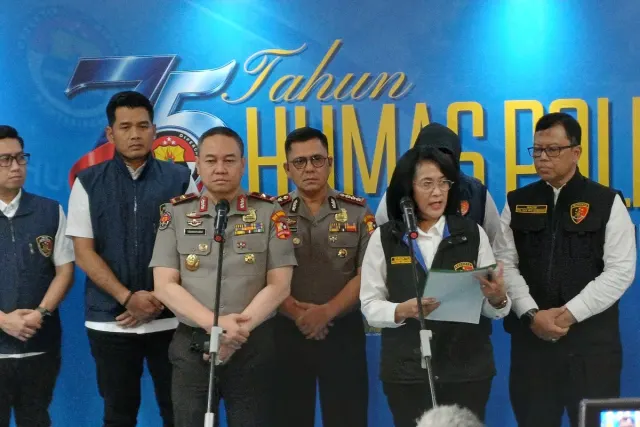
The effectiveness of foreign policy is highly dependent on domestic stability. In this context, President Prabowo's statement warning parties suspected of funding demonstrations can be interpreted as an effort to maintain internal order and stability. Domestic political and security stability is a prerequisite for Indonesia to project strength and credibility on the international stage.
Domestic disturbances, especially those suspected of having hidden agendas or being funded by external parties, can weaken Indonesia's bargaining position in diplomacy. Therefore, emphasizing the importance of maintaining public order and addressing potential manipulation in demonstrations is an integral part of the government's efforts to ensure Indonesia remains focused on its development agenda and constructive diplomacy.
This also indicates that the government will take a firm stance against any form of destabilization efforts that could threaten the unity and integrity of the nation. By maintaining internal stability, Indonesia can more freely and effectively carry out its geopolitical role, both regionally and globally.
Future Foreign Policy Projections
Moving forward, Indonesia's foreign policy under President Prabowo is expected to continue emphasizing economic diplomacy, seeking investment opportunities and new markets for Indonesian products. This aligns with the vision of a strong and independent economic development. Diversifying economic partners will be key to achieving this goal.
Furthermore, Indonesia will continue to be a guardian of regional peace and stability, particularly in the ASEAN region. Efforts to peacefully resolve the South China Sea dispute and support ASEAN centrality will remain priorities. Indonesia is also expected to continue playing an active role in global issues such as digital governance and renewable energy.
In essence, the new administration will strive to balance protecting fundamental national interests with its responsibilities as a member of the international community. This is a challenging but essential task in shaping Indonesia's future on the world stage.
Consistency in implementing the Free and Active Policy, supported by domestic stability and strong diplomacy, will be Indonesia's primary capital to face various challenges and seize opportunities in an ever-changing geopolitical era. Thus, Indonesia can continue to be a relevant and respected force, contributing to global peace and prosperity.
Key Points
- President Prabowo strengthens Indonesia's commitment to the Free and Active Policy amidst dynamic global geopolitics.
- The Free and Active Policy is a principle of not aligning with any bloc, but actively engaging in efforts for world peace and social justice.
- Parliamentary diplomacy and Indonesia's role in international forums are important pillars of foreign policy.
- Domestic stability, including addressing demonstration issues, is considered crucial to supporting effective diplomacy.
- Future foreign policy will focus on national interests, economic diplomacy, and regional stability.
Frequently Asked Questions
What is the Free and Active Policy?
The Free and Active Policy is a fundamental principle of Indonesia's foreign policy, which does not align with any power bloc but actively engages in efforts to create world peace and social justice.
Why is the Free and Active Policy relevant today?
Amidst global geopolitical tensions, superpower rivalries, and various crises, the Free and Active Policy allows Indonesia to maintain its sovereignty, protect its national interests, and play a mediating role without being bound by the interests of specific parties.
How is President Prabowo strengthening this commitment?
President Prabowo emphasizes the importance of consistency in implementing the Free and Active Policy, strengthening diplomatic capacity, and maintaining Indonesia's independence in determining its foreign policy direction, as stated on various occasions.
What is the role of parliamentary diplomacy in Indonesia's foreign policy?
Parliamentary diplomacy complements executive diplomacy by building inter-parliamentary relations, promoting national interests, and contributing to the resolution of regional and global issues through dialogue and legislative cooperation.
How does domestic stability affect foreign policy?
Domestic stability is the foundation for effective foreign policy. A country that is stable internally will have greater credibility and capacity to conduct strong and influential diplomacy on the international stage.